A good fireplace elevates a room, but the open-hearth versions that came with many older homes tend to waste heat and gulp air from the house. Fireplace inserts solve those problems. They slide into an existing firebox, connect to a flue liner, and transform a drafty feature into an efficient heat source with controlled combustion. If you have been weighing a gas fireplace insert against an electric fireplace insert, or wondering what the real costs and pitfalls look like, this guide walks through the details contractors consider on site.
What a Fireplace Insert Actually Does
Think of an insert as a self-contained firebox built to fit inside your masonry fireplace or, in some cases, a factory-built unit. The insert burn chamber, heat exchanger, and glass front are engineered to extract more heat from the fuel and send less up the chimney. Modern units often include variable-speed blowers that push warm air into the room, plus thermostats, remote controls, and safety sensors. The insert connects to a dedicated liner system inside your existing chimney, which handles exhaust and, in some designs, combustion air.
With a quality insert, real-world efficiency jumps. An open hearth might deliver 10 percent of its heat to the room. A properly installed gas fireplace insert can reach 70 to 85 percent efficiency, and some electric fireplace inserts convert nearly all input electricity into room heat, though they are limited by a 120-volt circuit unless you upgrade the electrical service.
Types of Fireplace Inserts and How They Differ
The main choices today are gas fireplace, electric fireplace, and wood or pellet. Each carries its own logic, costs, and care.
Gas fireplace inserts
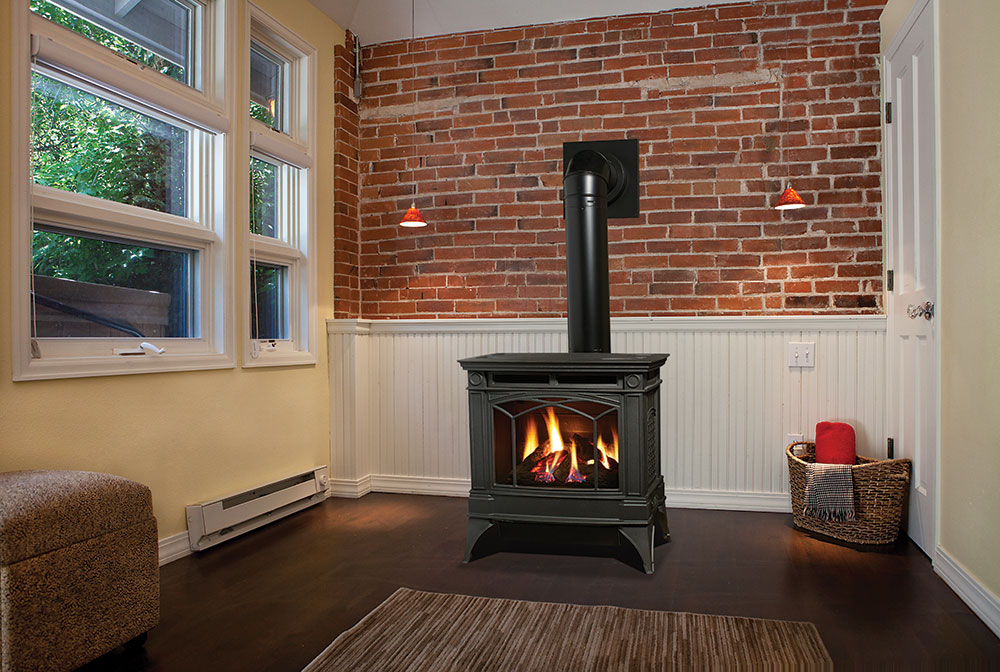
A gas fireplace insert burns natural gas or propane in a sealed combustion chamber behind tempered or ceramic glass. They ignite quickly, do not produce ash, and offer steady heat with easily-adjusted flame height. Direct-vent models draw combustion air from outside and exhaust outdoors through a co-linear or co-axial liner, which keeps indoor air cleaner and reduces drafts. Vent-free models exist in some jurisdictions, but many professionals avoid them because they release combustion byproducts, including water vapor, into the living space. Where they are legal, they still require a room volume calculation and a carbon monoxide detector, and I rarely recommend them except for brief supplemental use in large, well-ventilated areas.
For design, log sets range from rustic split oak to sculpted charred models with glowing embers. Contemporary models swap logs for glass media. Flames on a good unit look convincing, but performance matters more. Look for a balanced flow through the heat exchanger, a robust blower that is quiet at low speeds, and a control valve that modulates instead of simple on/off.
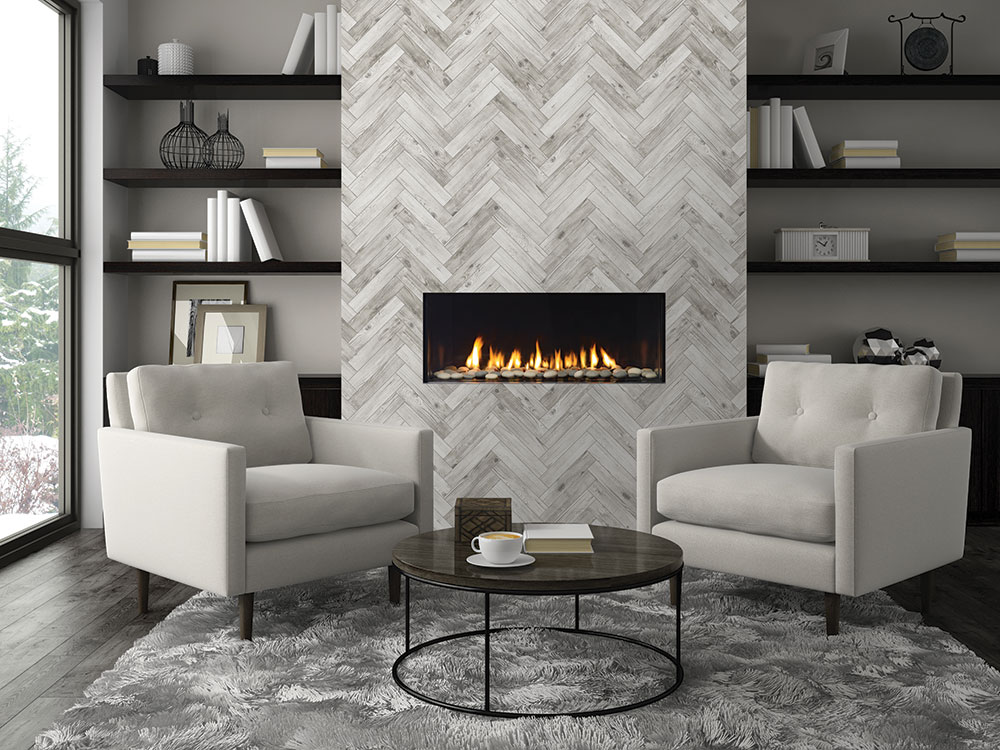
Electric fireplace inserts
Electric fireplace inserts rely on a resistive heating element and a fan, paired with LED flame effects that have improved dramatically. You will not get the radiant intensity of a high-BTU gas fireplace, but you get exact control and zero combustion. For certain spaces - basements with tricky vent runs, condo units, or rooms where https://privatebin.net/?bb8e542968a4a50b#ABoh8esU1CLH3x1C2Cy8n6JFGk2ifD9uX7YxmTZfN1rm you want ambience without gas infrastructure - electric can be perfect.
Most plug into a standard 120-volt circuit and deliver roughly 4,000 to 5,100 BTU per hour. That feels like a strong space heater, enough to add warmth to a sitting area but not enough to heat a large open floor plan. Some higher-output models require 240 volts. Electric fireplace inserts shine in simplicity. No venting, no gas line, almost no maintenance beyond dusting the intake grille. The flame effects vary from acceptable to striking, depending on the brand.
Wood and pellet inserts
Wood inserts suit homeowners who already stock firewood and enjoy tending a fire. Modern EPA-certified wood inserts burn cleaner and longer, with secondary combustion that re-burns smoke. Output can exceed 60,000 BTU per hour, which heats a medium home in many climates. The trade-off is work. You need seasoned wood, ash removal, and regular chimney cleaning service. Pellet inserts automate much of this: you load bags of pellets, and an auger feeds the burn pot under electronic control. Pellets produce steady heat with minimal ash, but you rely on the power supply and the pellet market.
Many clients start the process hoping for wood, then shift to gas once they consider labor, storage, and creosote risk. That is a practical choice, not a moral one. Households with good wood supply chains and a willingness to maintain their system often love wood inserts. The rest typically choose gas or electric.
What Things Actually Cost
Costs vary widely by brand and site conditions, but ranges help you set expectations before calling for quotes.
- Gas fireplace insert: Expect 3,500 to 7,500 dollars for the unit, with installation often bringing the total to 5,500 to 11,000 dollars. The spread reflects liner length and size, gas line complexity, vent termination details, trim and surround kits, and permits. A simple basement-level installation with a short, straight chimney and existing gas nearby might land near the lower end. A tall chimney with offsets, brickwork repairs, and a long gas run bumps the number. Electric fireplace insert: Units generally cost 400 to 2,000 dollars. Installation can be as little as a couple hundred dollars for a clean insert-and-plug job, but plan for 800 to 2,500 dollars if carpentry, finish work, or dedicated electrical circuits are added. If you need a new 240-volt circuit, factor in panel capacity and an electrician’s labor. Wood or pellet insert: Quality units run 3,000 to 5,500 dollars, with full installed costs commonly 5,500 to 9,500 dollars. Heavier liners, insulated stainless steel, and block-off plates at the damper add material cost, and you should budget for a chimney cap if your current one is not compatible.
Permits, inspection fees, and finishing costs, such as custom surrounds or hearth extensions, can add another 300 to 2,000 dollars. It is not unusual for a gas project with a high-end surround to reach 12,000 to 14,000 dollars. Be wary of quotes that ignore liners, termination caps, or code-required hearth dimensions just to hit a low headline price.
The Role of Chimney Inspections and Cleaning
If you are installing an insert into a masonry fireplace, start with a proper evaluation. Even a gas fireplace insert relies on safe venting. National standards call these levels of assessment:
Level 1, a basic visual check, suits annual maintenance when no changes are made. Level 2, a more detailed inspection with camera scans, applies when you are changing appliances or after a flue fire. Level 3 includes exploratory openings when hidden damage is suspected.
When I walk a site for a fireplace installation, I look for brick spalling, crown cracks, flue tile gaps, and smoke chamber parging. A camera down the chimney often reveals offsets, debris, or cracked tiles that would ruin a liner install. If the chimney has ever taken on water, expect to replace or repair the crown and add a proper cap. Before the new liner goes in, a chimney cleaning service should sweep the flue to remove soot and creosote. It is a small cost compared to the headaches of installing over debris.
The phrase west inspection chimney sweep pops up in some local search results, and while brand names vary by region, the point is consistent: hire a sweep who can document their findings, provide photos, and speak the language of codes and liners. You want a report that informs decisions, not a cursory glance with a vacuum.
Venting, Liners, and Air
The right venting strategy separates a reliable system from a chronic headache. Gas inserts typically use a co-linear setup: one 3-inch liner for intake, one 3- or 4-inch liner for exhaust, both running up the existing chimney to a termination plate and cap. Length, number of offsets, and fuel type dictate exact dimensions. Propane often favors a slightly larger exhaust run to keep draft stable. Some units use co-axial venting that combines intake and exhaust within a larger pipe. That choice depends on the insert model and chimney geometry.
Wood and pellet inserts use a stainless steel liner sized to the appliance flue collar. Insulated liners matter in cold climates or exterior chimneys. They keep flue gases warm, which stabilizes draft and reduces creosote. If you have an outside chimney with a long vertical run, insulation is not optional in my book.
For electric, no venting is needed, but do not overlook air circulation. The heater still draws room air across a heating element. Make sure the intake is not choked by a tight surround, and keep wiring accessible.
Sizing: BTUs, Space, and Glass Area
Manufacturers publish BTU ratings and heating area estimates, but local realities change the math. A well-insulated 1,500-square-foot house might feel comfortable with a 25,000 to 30,000 BTU gas insert running low to medium. An older house with leaky windows often needs 35,000 to 40,000 BTU to notice a whole-room difference. In open plans, heat goes where air goes. Expect to heat the zone around the insert, not the far bedrooms.
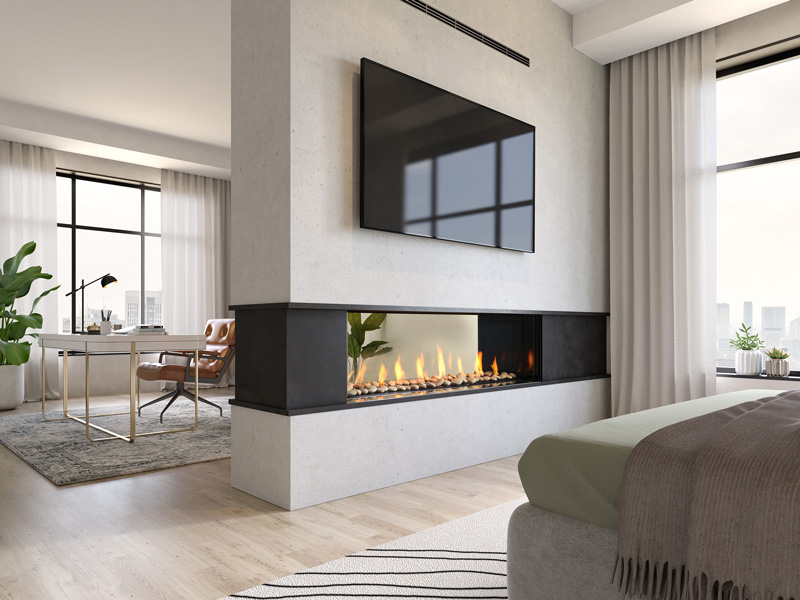
Glass area also matters. Large glass looks great but radiates more heat directly into the room and can become too warm to sit near with oversized units. If seating is within five feet, err toward a unit that can modulate down and still maintain flame stability. I often steer clients to inserts with a turndown ratio of at least 2:1, ideally better. That lets you enjoy the fire on mild evenings without turning the room into a sauna.
What Installation Actually Looks Like
A tidy project follows a sequence that protects the home and stays on code.
- Site verification: Measurements of the firebox opening, depth, and hearth, plus chimney height, offsets, and crown details. Confirm gas supply or electrical circuit capacity. Identify combustible trim, mantels, and any clearances that limit unit choices. Prep and cleaning: A chimney sweep removes soot. The crew protects floors and furniture with runners and plastic. Masonry edges are checked, and any loose brick or mortar is stabilized. Liner work: For gas, two flexible liners are snaked down the flue, terminated at a top plate with a cap that seals weather out. For wood or pellet, a single insulated liner is installed with a top clamp and cap. I like to install a block-off plate above the smoke chamber to keep heat in the room, not in the chimney cavity. Insert placement and hookups: The insert slides into the firebox on glides or shims. Connections are made to the liner, and gas lines are run with shutoff, drip leg, and proper bonding. For electric units, a recessed outlet may be added in the firebox or nearby chase. Trim and finishing: Surround panels cover the old firebox edges. Some projects add stone or tile. Sealants rated for high temperature are applied where needed. Commissioning and checks: We test draft, leak-check the gas with both bubble solution and an electronic sniffer, set blower speeds, verify flame quality, and confirm safety interlocks. A carbon monoxide alarm should be within hearing distance of the room, even for direct-vent gas.
A neat installation is quiet and clean. Crews that rush, skip the camera, or leave old ash beneath the insert usually cost more later.
Safety and Code Essentials
Gas appliances require clearances to combustibles, proper vent termination clearance from windows and rooflines, and a gas pressure within manufacturer specs. Regulators sometimes need adjusting when propane tanks are far from the house and line lengths cause pressure drop.
For wood inserts, the hearth extension must meet specific depth and R-value. Many older hearths do not meet current R-value requirements, so expect to add an approved hearth pad or extend the masonry. The flue must be sized to the insert; an oversized flue cools the smoke and encourages creosote.
Vent-free gas units remain controversial. Where they are legal, the manual’s room size, oxygen depletion sensor, and clearance requirements must be followed to the letter. Enough homeowners have reported condensation on windows and a heavy odor that I discourage vent-free except as a last resort solution.
Electric units should sit on circuits that can handle their draw alongside other loads. In older homes with 60-amp service or crowded panels, consult an electrician. Do not use extension cords for permanent installations.
Maintenance, Cleaning, and What Fails
A gas insert is low maintenance, but not maintenance-free. Annual service should include cleaning the burner ports, checking the pilot assembly or ignition system, clearing dust from blowers, inspecting gasket seals, and verifying vent integrity. A technician should also test for carbon monoxide under worst-case conditions, for example, with kitchen exhaust fans running.
Wood inserts demand regular ash removal and a chimney cleaning service at least once a season, more often if you burn daily. Signs of trouble include glazed creosote, draft reversal on windy days, and smoke spillage when the door opens. Most of these trace back to wet wood or an uninsulated exterior flue. A moisture meter is a small investment that pays back quickly: burn wood under 20 percent moisture content, and your insert will behave.
Pellet inserts need periodic cleaning of the burn pot holes and ash traps, plus an annual deep clean of the vent passages. Auger jams usually stem from poor pellet quality or fines accumulation. Keep pellets dry, ideally in sealed containers in the house or a dry garage.
Electric inserts mostly run until their fans or control boards fail after many years. Vacuum dust from the intake grill a couple of times a season, and keep an eye on any rattling that hints at a loose fan mount.
Energy Use and Operating Costs
Gas prices and electric rates swing across regions, so run the math for your area. As a rough example, natural gas at 1.50 dollars per therm and a gas insert at 75 percent efficiency yields real heat at around 2 dollars per 50,000 BTU of output. Electricity at 15 cents per kilowatt-hour and an electric insert at 100 percent efficiency costs about 1.50 dollars per 5,100 BTU hour for continuous operation, so roughly 15 dollars for 50,000 BTU equivalent. That puts gas ahead for heavy heating duty in most markets.
That said, electric shines for shoulder seasons and ambiance. You can run the flame effect on many units with no heat or low heat, which keeps operating costs minimal. Propane narrows or reverses the cost advantage depending on delivery rates, so ask your fuel provider.
Common Mistakes to Avoid
- Oversizing the insert for the room. Big numbers look good on paper but force you to run the unit low, where flames can be weak and glass soots more easily for gas units. Aim for capacity you will use across most winter days, not the coldest week of the decade. Skipping chimney inspections. A camera and a documented report save money. Hidden offsets, broken tiles, or a compromised crown will complicate liner work. Ignoring makeup air. Tight homes need balanced ventilation. A strong kitchen hood can pull on a wood insert and cause smoke spillage. Consider a direct-vent gas model or provide makeup air. Neglecting clearances. Mantel, trim, and TV placement all have clearance charts in the manual. I have seen scorched finishes and melted sound bars because a bracket looked convenient. Choosing vent-free to dodge costs. Shortcuts show up later as moisture on windows, odor complaints, and headaches. Venting is worth the effort.
Choosing Between Gas and Electric When Both Are Viable
If a gas line exists nearby and you want real space heating, a gas fireplace insert is the better tool. It gives you higher BTU output, stable long-burn comfort, and realistic flame. If you are in a condo with no gas and a restrictive HOA, electric fireplace inserts are a practical upgrade that still deliver atmosphere and supplemental heat. Electric also wins in rooms where you want occasional use without recurring service calls.
Think about the room’s role. A family room that anchors winter evenings deserves the performance of gas or wood. A bedroom or home office might be better served by electric, particularly if noise and drafts from a vent are a concern.
What To Ask During Estimates
Contractors often default to what they install most. Your job is to pull out details that reveal competence. Ask how they will size the liner, whether they plan to insulate it, what termination cap they will use, and how they will handle a damper block-off plate. For gas, ask about how they will test gas pressure and combustion, and whether they will commission the unit with a CO test. For electric, ask where the outlet will go and how they will manage cable routing behind the surround.
A reputable provider will not balk at a camera-based chimney inspection. They will also handle permits and coordinate any masonry or electrical work. If you hear that none of that is necessary, slow down and get another bid.
A Quick Pre-Installation Checklist
- Confirm the firebox and chimney dimensions with a tape measure, not assumptions. Measure width at front and back, depth, and height at multiple points. Schedule a Level 2 chimney inspection and a cleaning before installation day. Decide on gas, electric, wood, or pellet based on how you will actually use the room, not just looks. Plan for clearances to mantels and TVs. Move or shield sensitive electronics if needed. Verify the fuel or electrical plan: gas line size and route, or circuit capacity and outlet location.
Final Thoughts from the Field
The best experiences follow a pattern. Homeowners start with a clear sense of how they live in the room, choose an insert that matches that rhythm, and engage a contractor who treats venting and safety as the backbone, not the afterthought. A gas fireplace insert with a properly sized, insulated liner in a tall exterior chimney will draft smoothly on a bitter night. An electric fireplace insert that sits on a dedicated, tidy circuit will deliver clean ambience and steady comfort without drama. Wood and pellet reward those willing to tend fire and maintain flues, and they can carry a home through outages when gas or power constraints loom.
No single choice fits every house. If your priority is effortless warmth and a natural-looking flame with real heat, gas fireplaces make sense. If your priority is simplicity, no venting, and flexible placement, electric fireplace inserts excel. Whatever your path, make chimney inspections and a competent chimney cleaning service part of your plan, and insist on workmanship that respects the physics behind the flame. That is how you turn a pretty box in the wall into a reliable heart of the home when the weather turns cold.